
A lot can go wrong between one test date and the next.
That’s probably the biggest theme running through September’s update - damaged leads developing between scheduled checks, higher WHS penalties, and the basic testing decisions that still trip people up.
With National Safe Work Month nearly here, it’s a timely month to look at where electrical safety can quietly come unstuck.
Damaged Leads Highlight Why Testing Can’t Be “Set and Forget”
WorkSafe Victoria has issued a safety alert after multiple workers received electric shocks from damaged power leads and plugs on mobile hospital equipment.
The incidents involved equipment such as hospital beds and patient trolleys that are regularly moved, plugged in and unplugged. WorkSafe found leads had been pinched, pulled, or damaged by wheels and moving parts during normal use.
One of the more important findings was that some of the damage developed between scheduled maintenance inspections and test and tag intervals.
That matters because a passed test only tells you the equipment was safe at that point in time. If a lead is damaged the next day, the tag does not suddenly make it safe until the next scheduled test.
Equipment that gets moved, unplugged or knocked around regularly can change condition quickly, which is why visual and pre-use inspections remain so important. WorkSafe also recommends that inspection and testing intervals reflect how the equipment is actually used and the level of risk involved.
The takeaway is simple: test dates matter, but so does what happens to the equipment in between them.
View the WorkSafe Victoria safety alert
WHS Penalties Reach a Record Average
Safe Work Australia has released its latest WHS prosecutions data, covering 2025. The dashboard is updated annually, so 2025 is the most recent full year currently available.
There were 308 WHS prosecutions nationally, down from 321 the previous year, but the average financial penalty rose 33% to $147,985 - the highest annual average recorded. Financial penalties were imposed in 99% of prosecutions.
Construction remained the most common industry among defendants, accounting for 43% of cases, followed by manufacturing at 20% and mining at 6%.
These figures aren’t specifically about test and tag, but the broader message is that businesses are still expected to have proper systems in place for identifying risks, maintaining equipment and keeping people safe.

Good electrical safety is only one part of that picture, but it’s one that should be relatively straightforward to stay on top of.
View the latest WHS prosecution data
The First Decision that Can Make or Break the Test
Before you run any electrical test, you need to know what type of equipment you’re dealing with.
Class I and Class II appliances are built differently, which means they’re also tested differently. Get that classification wrong and you can end up choosing the wrong test, misreading the result or creating unnecessary confusion before you’ve really started.
Class I equipment relies on protective earthing and basic insulation as part of its protection against electric shock, while Class II equipment uses double or reinforced insulation and doesn’t rely on an earth connection.
It’s basic test and tag knowledge, but it’s also one of the first decisions that determines whether the rest of the process makes sense.
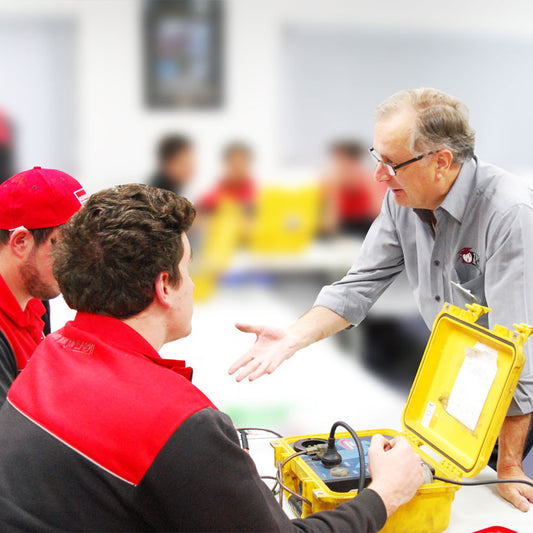
We’ve put together a short guide with our trainer Mark - he explains how to tell the difference and what to look for before testing.
Learn more about Class I and Class II equipment
National Safe Work Month Is Almost Here
October is National Safe Work Month, and Safe Work Australia has now released its 2026 resources to help workplaces get involved.
This year’s theme is “Safe work is for life”, focusing on the fact that workplace safety isn’t just about avoiding an incident today - it’s about protecting workers’ health, lives and future over the long term.
Throughout October, workplaces are being encouraged to start conversations, review risks and take practical action rather than treating safety as another box to tick.
For anyone responsible for electrical equipment, it’s also a good opportunity to ask a few simple questions:
- are testing schedules current?
- are damaged items actually being removed from service?
- do the people using the equipment know what to look for between tests?
Safe Work Australia has released posters, discussion guides, activities and other resources for workplaces wanting to take part.
More Test & Tag Training in Geelong
Our Geelong training location was recently featured in The Tradie Magazine, as Test & Tag Training continues to expand access to nationally recognised training outside inner Melbourne.
For local tradies, businesses and workers, the benefit is simple - being able to complete face-to-face training (UEEESS00174 - Electrical Safety Testing of Electrical Cord Connected Equipment and Cord Assemblies Skill Set) with an instructor in Geelong without having to travel into the city.
The feature also comes as the wider EXELNetwork business marks 20 years in the test and tag industry, with its roots stretching back to Appliance Testing Supplies.
Today, that experience spans both the equipment and training sides of the industry, with Test & Tag Training now operating across every state in Australia with 19 venues, and the most reviewed test and tag training provider in Australia with 30